City table
Chengdu Local Guide
Chengdu does not ask you to hurry. It asks you to sit down, order a bowl of tea, and let the afternoon happen.
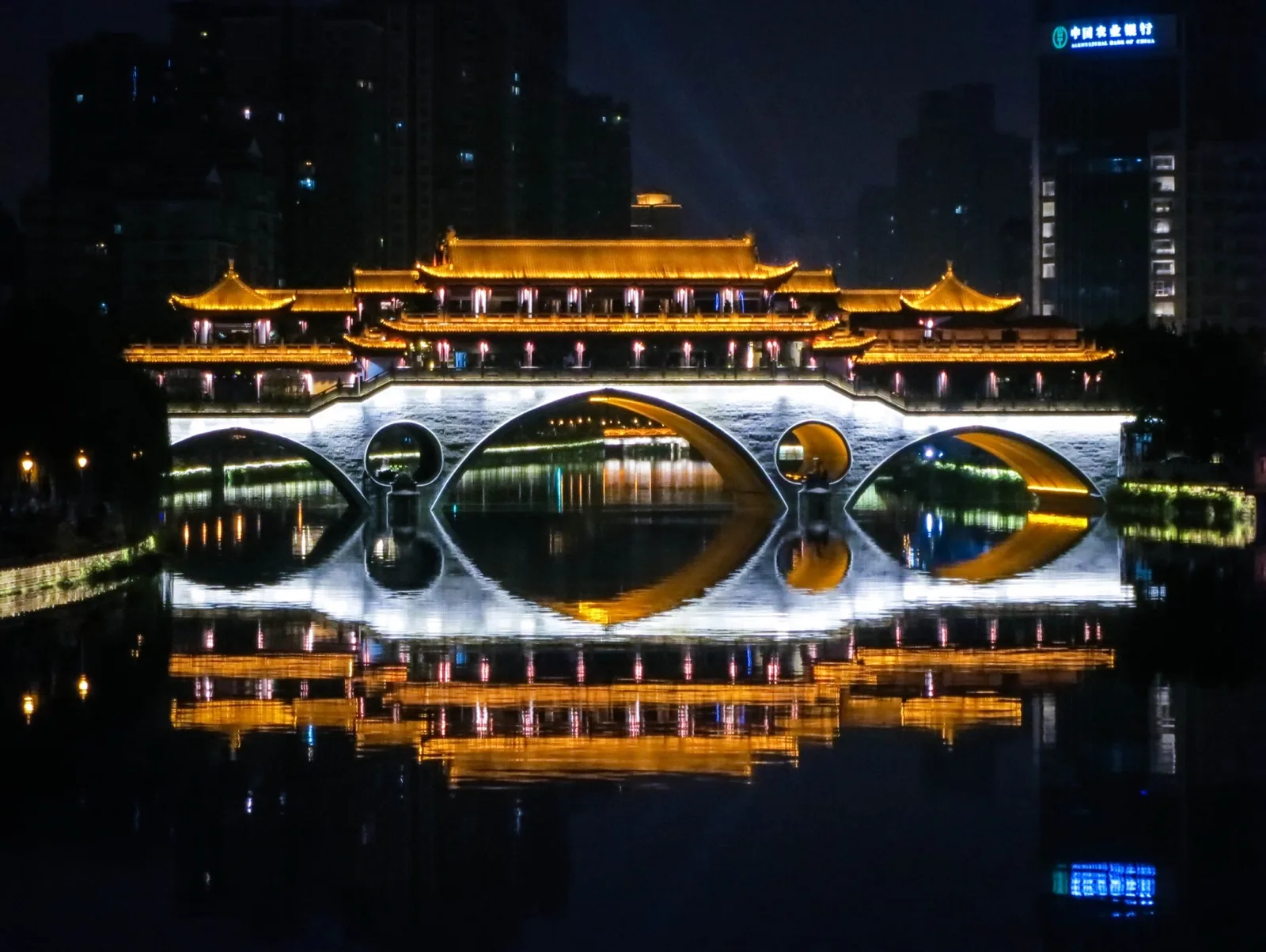
Chengdu is the capital of Sichuan and one of the largest cities in western China, but its reputation is built on something smaller: the tea table. The city is famous for pandas, hotpot and a pace of life that locals call bashi — comfortable, easy, just right. The first thing to do here is not a sight. It is to sit down.
Why Chengdu
Chengdu sits on the Chengdu Plain, one of the most fertile corners of China, and has been a regional capital for more than two thousand years. In 2010 it became the first Asian city to be named a UNESCO City of Gastronomy. The title matters less than what it describes: a city where people take lunch seriously, argue about the best noodle shop, and plan the day around when the tea is fresh.
It is also the gateway to Sichuan. The pandas, the mountains of western Sichuan, the tea terraces and the Tibetan plateau are all within reach. But most visitors underestimate Chengdu itself. It rewards the people who stay an extra day and leave the itinerary alone.
The teahouse is the living room
Heming Teahouse in People's Park is the easiest place to understand the city. It opened in 1923, when a merchant from Dayi County built a pavilion-style tea house beside the lake. The name comes from a dream: cranes standing in a pond, singing. A century later the bamboo chairs are still out under the trees, the tea still comes in a gaiwan, and the hot water still arrives from a long-spouted copper kettle.
The rules are simple. You pay for the tea, not for the time. Refills are free, and nobody will move you on. Locals read, play mahjong, peel melon seeds, get their ears cleaned, or do nothing at all. The teahouse is loud, sociable and completely unbothered by the idea that you might have somewhere else to be.
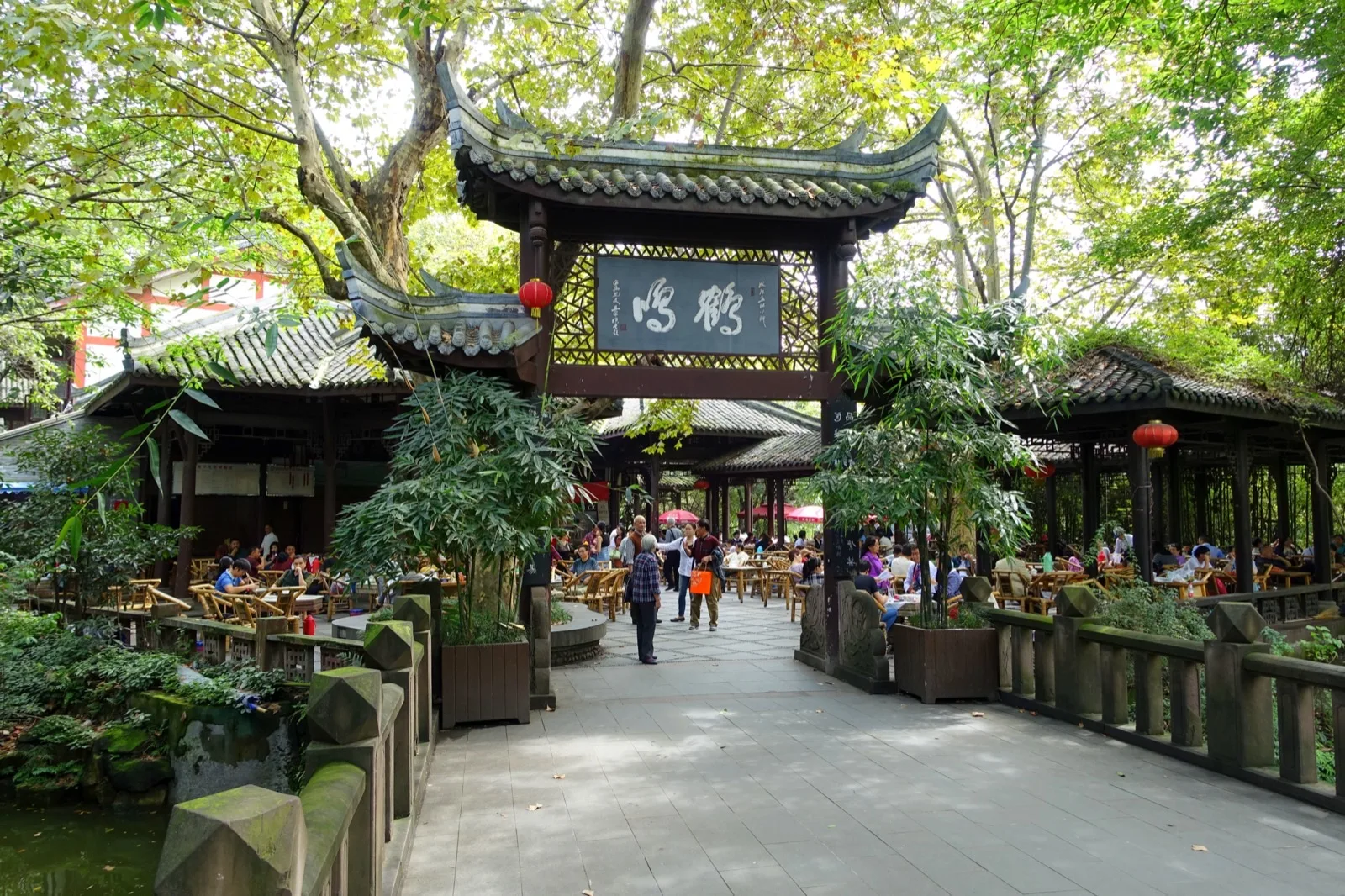
If you only do one thing in Chengdu, do this: arrive before nine, order a jasmine tea, and watch the park wake up. The tea is ordinary. The sitting is the point.
What to eat
Chengdu is the capital of Sichuan cuisine, and the food is not a single flavour but a balance: chilli heat, the tingling numbness of Sichuan pepper, fermented bean paste, sweet soy, vinegar, sesame. The city has been UNESCO's first City of Gastronomy in Asia since 2010, but the everyday version is simpler: a bowl of noodles at eight in the morning, a shared hotpot at eight at night.
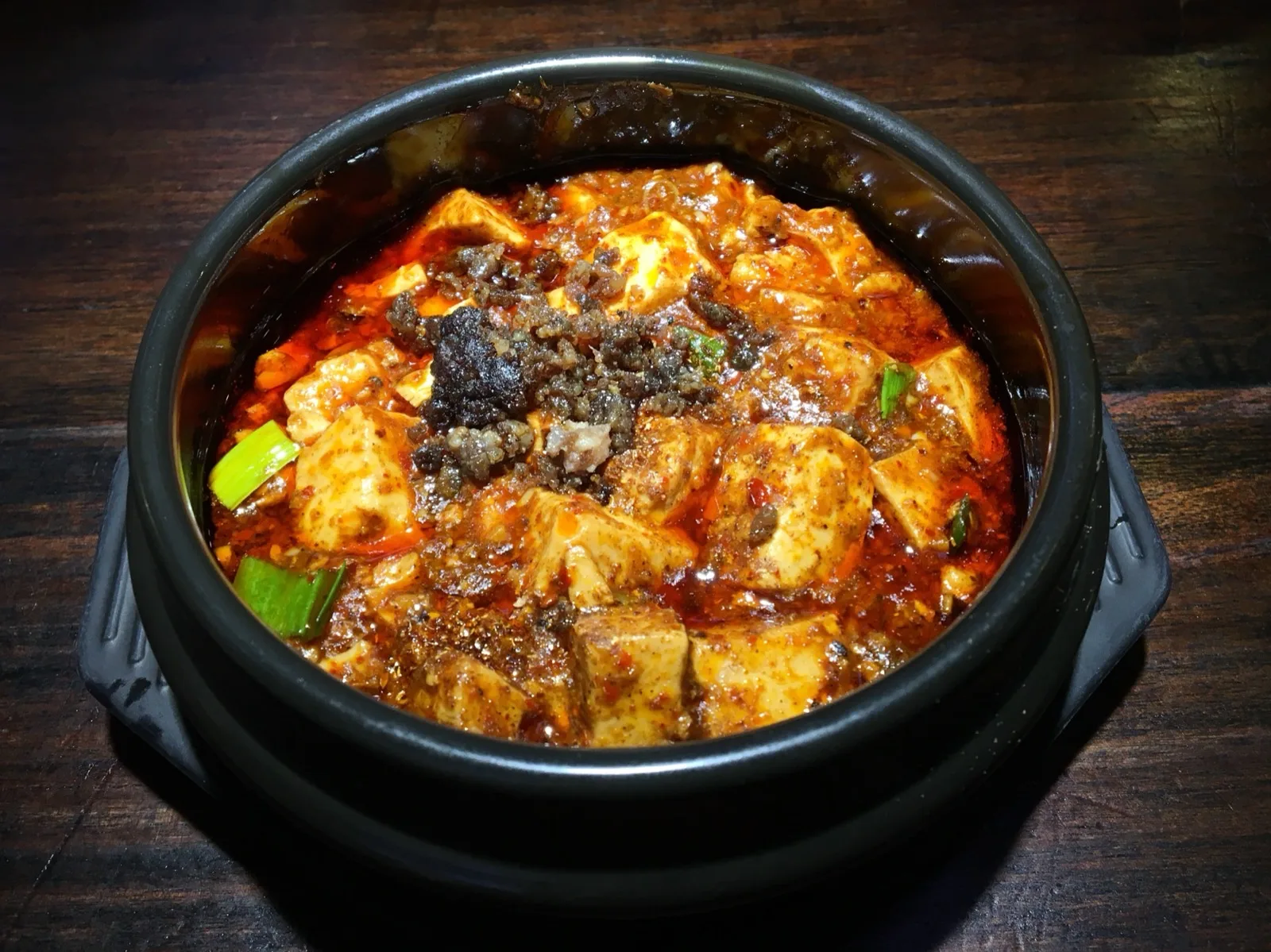
Mapo tofu is the dish to start with. It was created in 1862 at a small rice shop near the Wanfu Bridge, by a widow whose face was marked by smallpox — chen mapo, Old Mother Chen. Soft tofu, minced beef, doubanjiang and ground Sichuan pepper, served bubbling and eaten with plain rice. The original house still trades under her name.
Dan dan noodles are the other essential. The name comes from the shoulder pole vendors used to carry a stove and bowls through the streets. In Chengdu it is a small bowl with almost no soup: thin noodles, crisp minced pork, preserved mustard greens, chilli oil and Sichuan pepper waiting at the bottom. Stir before you eat.
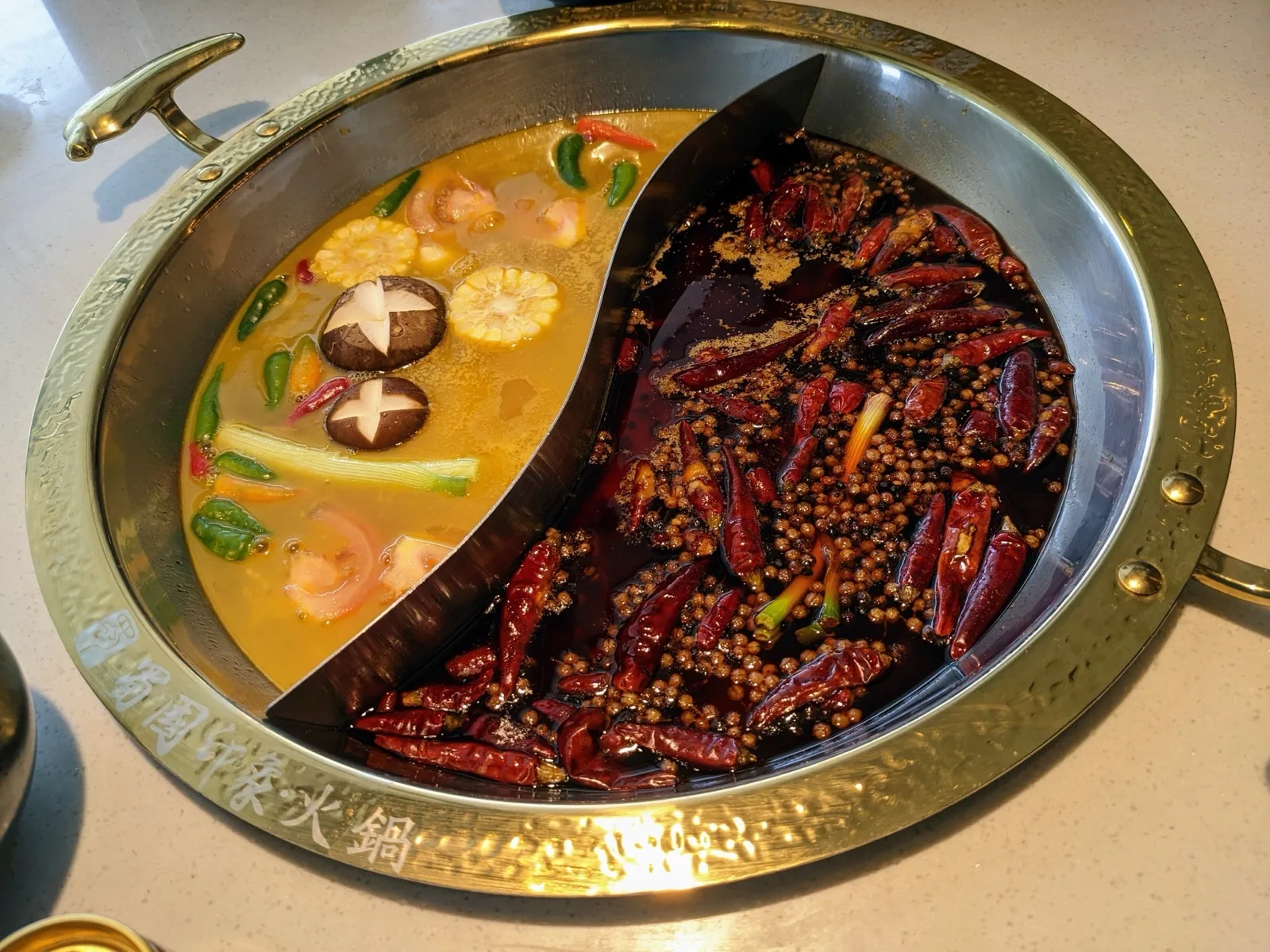
Then there is hotpot. A group sits around a bubbling pot of beef tallow and chilli; you cook what you order, dip it in sesame oil and garlic, and keep talking for two hours. Order tripe, duck intestine, beef slices, lotus root and tofu. If your table has mixed spice tolerance, ask for a divided pot — half red, half clear. It is not a compromise; it is what most local tables do.
Where to eat: Yulin, south of the centre, is the residential neighbourhood with the deepest everyday food. Kuixinglou Street, a short walk from Kuanzhai Alley, is where younger Chengdu eats skewers and noodles. Jianshe Lane is louder and later. Skip Jinli and Kuanzhai Alley for dinner — they are for walking, not for the best meal of the day.
Neighbourhoods, without the gloss
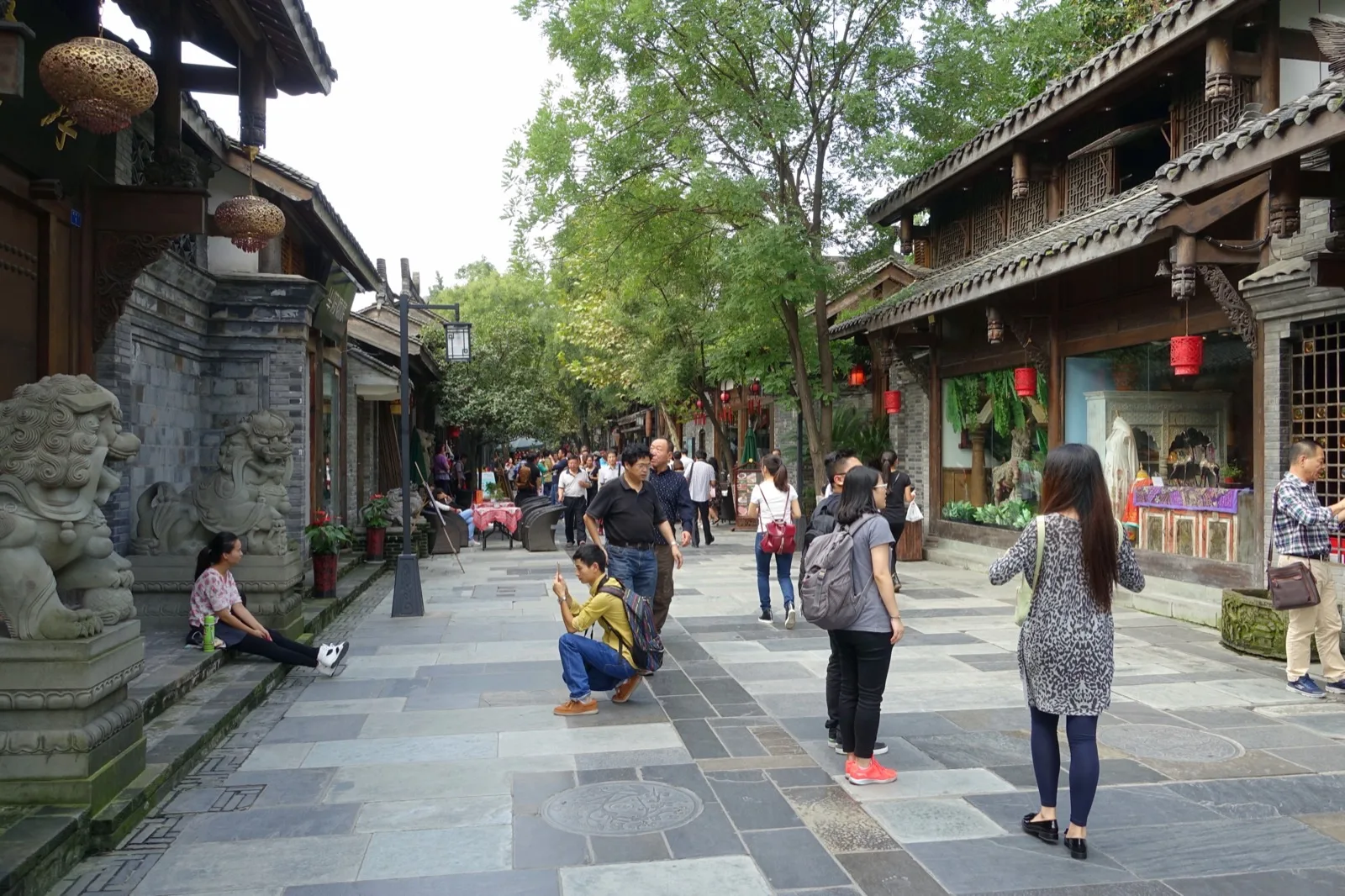
Kuanzhai Alley is three parallel lanes in the old Manchu garrison quarter, rebuilt and reopened in 2008. The grey-brick gateways are beautiful, but it is a heritage shopping street, not a neighbourhood. Go before ten, walk all three lanes, then leave for lunch on Kuixinglou Street.
Taikoo Li is the other side of the city's self-image: a low-rise shopping district wrapped around the working Daci Temple, with fashion shops, coffee and restaurants. It is at its best after dark, when the courtyards light up and the temple is quiet behind the glass.
Yulin is where the city actually lives. Low apartment blocks, tree-lined streets, noodle shops that close when the noodles run out, bars that open late. It is not a sight. It is a good place to stay if you want to eat well without planning.
Jinli and Wuhou Shrine are rebuilt, busy and unashamedly for visitors. See them once if you want the postcard, but do not judge Chengdu by them.
A first night
Land, drop your bag, and go outside. If it is still light, walk to People's Park and take a tea at Heming; if it is dark, go straight to hotpot. After dinner, walk the Jin River to Anshun Bridge, where the city's lights do their best impression of a postcard. If you want a show, the Sichuan opera face-changing performances are short, loud and worth one evening.
The first night is not the night to chase every recommendation. Chengdu rewards a second visit more than a packed first one. Pick one table, one bowl, one walk. The rest can wait.
Practical notes
Chengdu has two airports. Tianfu International (TFU) handles most international flights and sits about 50 km south-east of the centre; Metro Line 18 connects it to Chengdu South Railway Station in roughly 35–50 minutes. Shuangliu (CTU) is closer, about 16 km south-west, and is connected by Line 10. Check which airport your ticket uses before you book a hotel.
- Metro: clean, cheap and everywhere. Fares run from ¥2 to ¥10; Alipay, WeChat Pay and foreign bank cards work at the gates.
- Weather: hot and humid in summer, damp and grey in winter. Spring and autumn are the easy seasons.
- Language: Mandarin with a strong local dialect. English is limited outside hotels and expat restaurants; a translation app is useful.
- Tea: one cup, free refills, no time limit. Ear cleaning is optional; agree the price first.
- Crowds: avoid the May Day holiday, National Day week and the Spring Festival travel rush.
Sources and verification
- 1.成都“网红”鹤鸣茶社100周岁了XinhuaVerified November 29, 2026
- 2.鹤鸣茶社Chengdu People's ParkVerified November 29, 2026
- 3.Teahouse offers a taste of Chengdu cultureChina DailyVerified November 29, 2026
- 4.A taste of Chengdu – the capital of China's mouthwatering Sichuan cuisineLonely PlanetVerified November 29, 2026
- 5.Things to Do in Chengdu: People's Park Teahouses, Wenshu Monastery, Sanxingdui and a Three-Day PlanAsia UndiscoveredVerified November 29, 2026
- 6.Sichuan Food: Mala, Mapo Tofu, Dan Dan Noodles and Where to Eat Them in ChengduAsia UndiscoveredVerified November 29, 2026
- 7.Practical Guide for International Visitors in ChengduIAEAVerified November 29, 2026
- 8.Chengdu Tianfu International Airport: MetroChengdu Tianfu International AirportVerified November 29, 2026
- 9.Chengdu travel guideWikivoyageVerified November 29, 2026