Story
Heming Teahouse: A Hundred Years of Tea
Heming Teahouse opened in 1923. It has outlived the park's other tea houses, a war, a rebuild and a revolution in how cities spend their free time. The tea is still ordinary; the sitting is still the point.
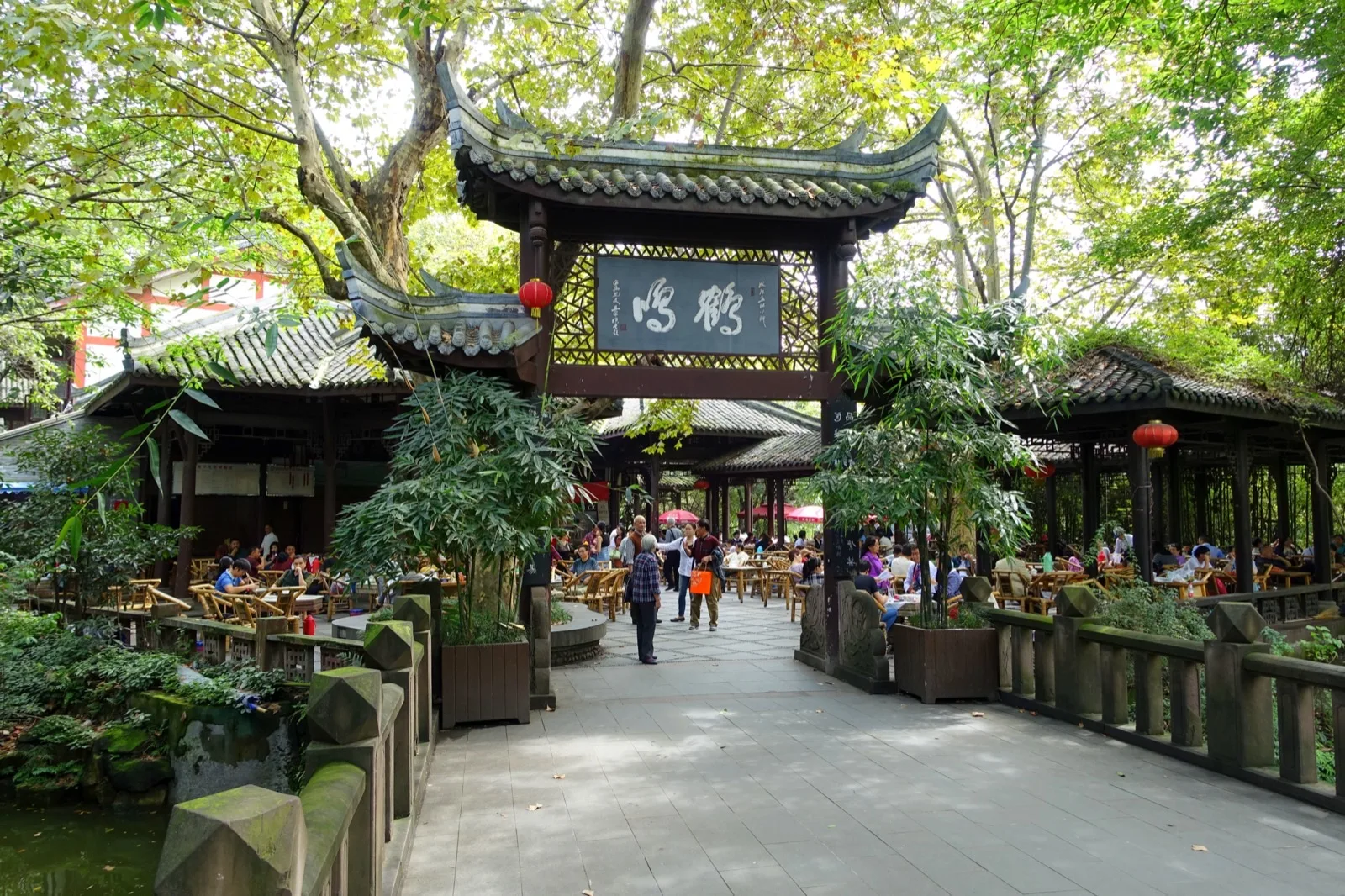
At half past seven in the morning, People's Park is already awake. A few people are practising tai chi under the trees; a man is writing characters on the paving with a long water brush; the first tour groups are still an hour away. Inside Heming Teahouse, the bamboo chairs along the lake are filling up.
Before the city starts
The regulars arrive early. They order a gaiwan of tea, put their bag on the next chair, and settle in. A server arrives with a long-spouted copper kettle and fills the bowl from a height, the water landing in a tight circle. The lid goes back on. The tea is left to steep. Nobody is in a hurry.
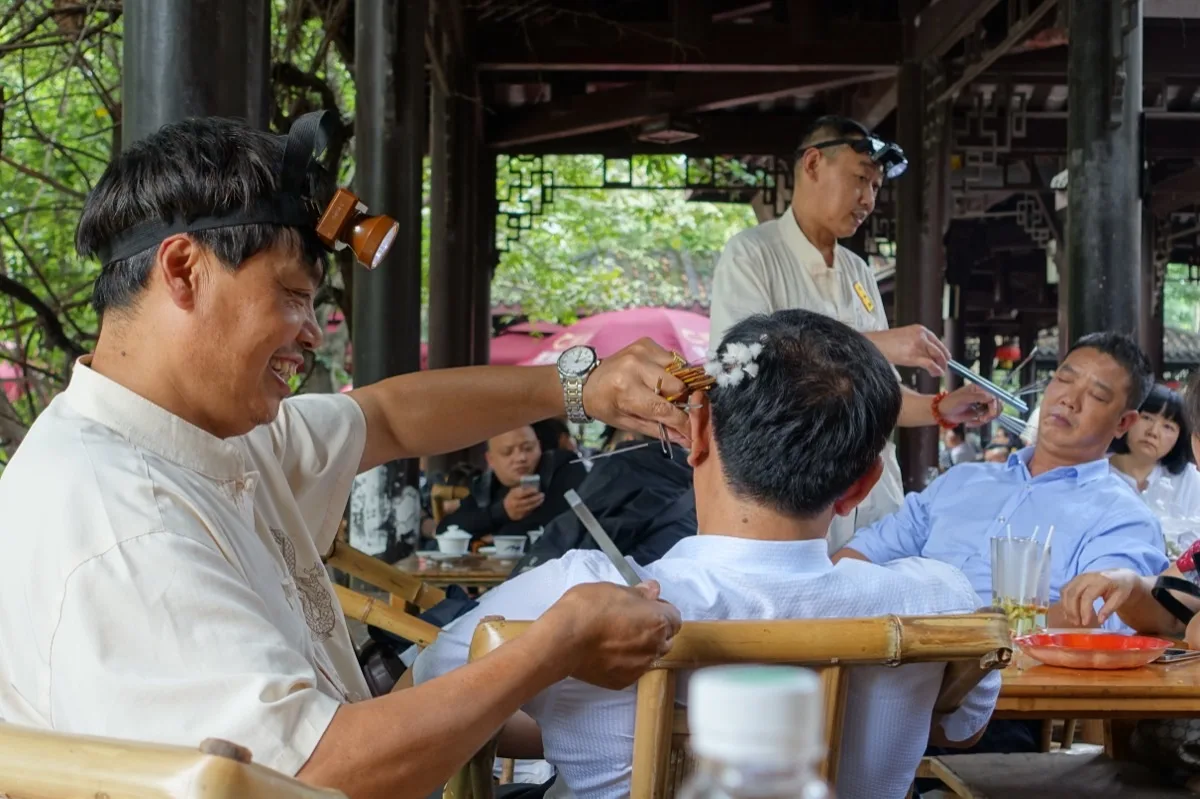
Around them, the park gets on with its morning. Someone is playing mahjong at a low table. An ear cleaner walks between the chairs with a small case of picks and a tuning fork. A group of older women are dancing to a speaker. The teahouse is not a quiet museum of tea culture; it is a working living room, and the city uses it.
A teahouse built on a dream
Heming Teahouse opened in 1923. A merchant from Dayi County, surnamed Gong, was walking in what was then Shaocheng Park when he decided to build a tea house beside the water. Local histories say he dreamed that night of cranes standing in a pond, singing, and named the place after them: he ming, the singing crane.
The tea house survived the century that followed. In 1940 the calligrapher Wang Jiazhen wrote the horizontal sign that hung over the entrance; it was removed in 1952, and Wang rewrote it in 1988. In 2012 the city listed Heming as one of its first protected historic buildings. In 2023 it marked its hundredth year.
It is also the last of its kind in the park. In the Republican period there were six tea houses here, each with its own clientele: students, merchants, local notables, martial artists, scholars. Only Heming is still trading. The others closed as the park changed and the city rebuilt around it.
The ritual
The tea itself is ordinary. Jasmine, green tea, a local spring bud if you want something brighter. What you are paying for is the seat, the shade and the permission to stay. One bowl buys the table for the afternoon; hot water refills are free, and nobody will ask you to leave.
The extras are part of the theatre. Ear cleaning is a separate service: a practitioner uses fine picks, a feather and a tuning fork, and it lasts a few minutes. It is not medical care, and the price should be agreed before it starts. The long-spouted kettle pour looks like a performance, but it is simply how the tea is served.
Then there is the talking. Chengdu has a phrase for the long, unhurried conversation that fills a teahouse — bai long men zhen, setting up the dragon gate formation. It means talking about nothing in particular for as long as it takes. The tables around you are doing exactly that.
What the century changed
In the 1930s and 1940s, Heming was where teachers came during the winter and summer holidays to look for work. The city called it the June and December war: schools hired in public, and teachers waited at the tables for a contract. The teahouse was a labour market before it was a tourist attraction.
Today the tables are shared by older regulars, families, students and visitors with phones. The park has been reopened to the city, the lake is still there, and the tea still costs less than a cocktail. The teahouse has changed less than the skyline around it.
How to visit
Heming is inside People's Park, in central Chengdu. The park is free; you pay for the tea. Metro Line 2 or Line 17 to People's Park station, Exit B, puts you at the north gate, a few minutes' walk from the lake.
- Go early. The local hour is roughly 6:30–8:30; by mid-morning the tour groups arrive.
- Order a gaiwan of jasmine or Mengding ganlu. Refills are free; one bowl is enough for a long sit.
- Ear cleaning is optional. Agree the price and what is included before it starts.
- Don't move another table's cups, and ask before watching a mahjong game.
- Weekends and public holidays are busy. A weekday morning is a different place.
Sources and verification
- 1.成都“网红”鹤鸣茶社100周岁了XinhuaVerified November 29, 2026
- 2.鹤鸣茶社Chengdu People's ParkVerified November 29, 2026
- 3.Teahouse offers a taste of Chengdu cultureChina DailyVerified November 29, 2026
- 4.In China, Chengdu's peculiar ear-cleaning customBBC TravelVerified November 29, 2026
- 5.People's Park Audio Guide (Renmin Gongyuan), ChengduEarGuideVerified November 29, 2026
- 6.Chengdu's ancient teahouses are going viral—here's whyNational GeographicVerified November 29, 2026
- 7.Chengdu Tea Houses: The Ultimate Guide to Best Teahouses, Tea Culture & Local LifeChengdu TravelsVerified November 29, 2026